
Coincidences at the Casino: Rare for You, Routine for the Crowd
February 12, 2026 • Betleecasino.com editorial team
What this page used to say. An earlier version presented four "exclusive" coincidences from "Betlee Casino players", "verified by our team": Tom, 38, who played his rescue dog's dates on keno and caught all 8 numbers for $400,000 on the dog's birthday; Grace, 65, who "heard" her late husband pick a slot machine and won $280,000; twins Alex and Ben, who unknowingly chose identical lotto numbers and split $1.1 million; and Nina, who put her last $1,000 on black 22 after a stranger's whisper and collected $35,000. None of the stories has a surname, a date, a casino or a receipt, and there was no community to verify them with: on 22 September 2026 we could not find a working Betlee site at all (betlee.com has no website, and betlee.org sends players to betlee7.com, a parked domain). The stories have been removed.
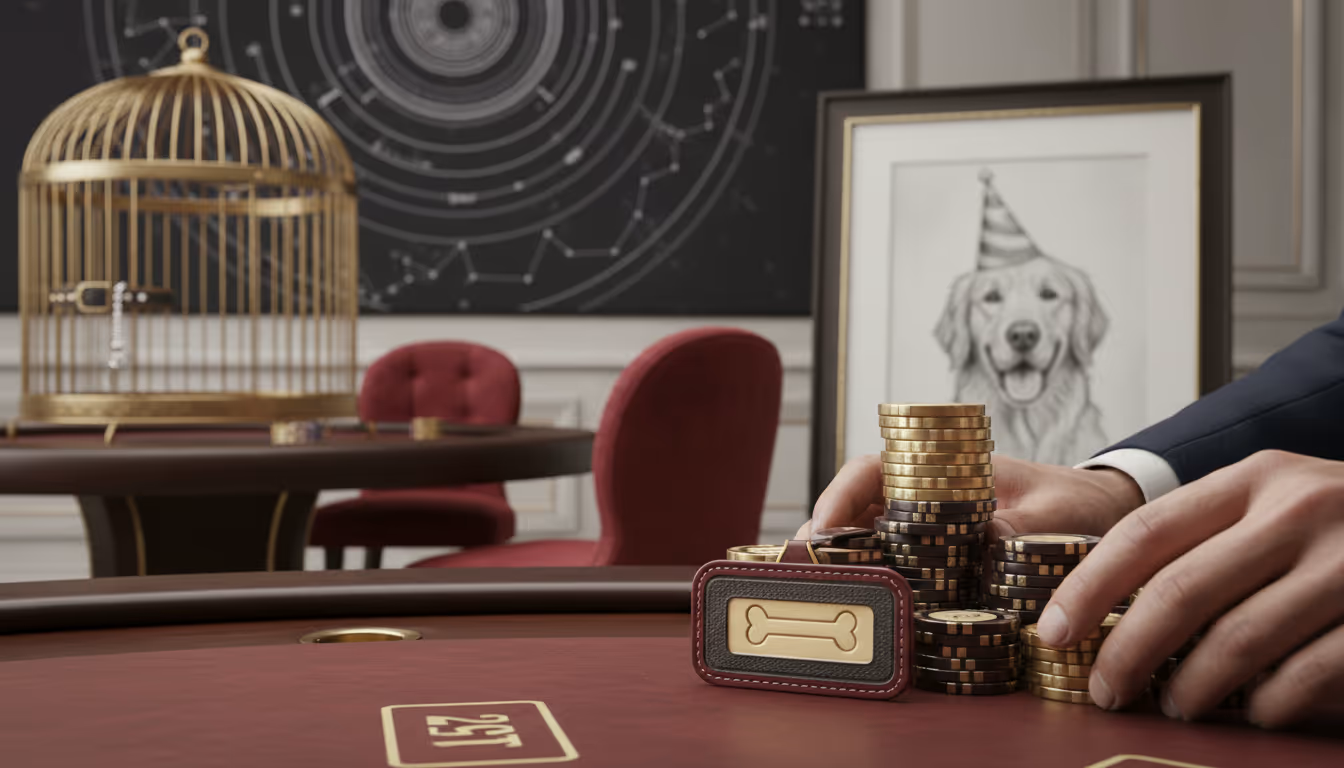
Rare for one player, routine across a million tickets
Keno draws 20 numbers out of 80. A ticket with 8 numbers catches all eight about once in 230,115 games. For one person that is practically never. But a busy keno system handles hundreds of thousands of tickets: across 500,000 independent 8-number tickets, the chance that at least one catches all eight is roughly 89%. Somebody wins; the only surprise is who. Statisticians call this the law of truly large numbers: with enough attempts, an event that is rare per attempt becomes almost certain to happen to someone, and that someone then gives it a meaning — a dog's birthday, a whispered number.
The numbers themselves never carried the meaning. A ticket with 7, 12 and 5 has exactly the same chance as one with 41, 66 and 78. The story supplies the reason afterwards.
| Event | Chance per attempt | Does a meaningful number change it? |
|---|---|---|
| A single number on European roulette | 1 in 37 (pays 35 to 1) | No |
| The same number on two spins in a row | 1 in 1,369 | No |
| All 8 of 8 in keno (20 drawn from 80) | 1 in 230,115 | No |
| All 10 of 10 in keno | about 1 in 8.9 million | No |
Checking the four stories
Nina's arithmetic is the only complete one: $1,000 on a single number at 35 to 1 returns $35,000 plus the stake. But the story says she was "down $200" and then placed her "last $1,000", which does not add up, and a stranger's hint cannot change a 1-in-37 chance. On European roulette every standard bet keeps 2.70% for the house on average, so the $1,000 bet had an expected loss of $27, whether the number came from a whisper or not.
The twins are not a coincidence at all: two brothers choosing "family dates" will choose the same dates. Dates are also a crowded choice. They only use the numbers 1 to 31, so in a lottery a winning ticket made of dates is more likely to share the prize with strangers. Grace's slot and Tom's keno come without a machine, a paytable or a date, so there is nothing to check; a slot's result is decided by its random number generator at the moment of the spin, not by which machine a voice points to.
Why a coincidence feels like a message
Memory is selective: the one time a birthday number came up is remembered, the hundred times it didn't are not. Stories are also filtered by survivorship bias: Tom's win gets retold, while the thousands who played their pet's birthday and lost write to nobody. And after a striking hit many players believe they are "on a streak" or that a number is "due" again — the gambler's fallacy. Every draw is independent; a number that has just come up has the same chance next time as every other number.
A practical takeaway. Play meaningful numbers if you enjoy it, but treat them as decoration, not a system. Set deposit and loss limits in your account before you play, decide in advance at what amount you will withdraw, and never gamble on credit. If you catch yourself looking for signs, or chasing the feeling that a number is due, contact your national gambling helpline or a support service; the call is free.
Kindness as a "luck" factor is examined in why generosity does not change a slot's result, and numbers that people carry for life are looked at in why a tattooed number has the same chance as any other.
Frequently Asked Questions
What are the odds of catching all 8 numbers in keno?
With 20 numbers drawn out of 80, an 8-number ticket catches all eight about once in 230,115 games. What that pays depends on the paytable, which differs from game to game.
Are birthday numbers luckier?
No. Every number has the same chance in every draw. Dates only cover 1 to 31, so in a lottery a winning ticket made of dates more often shares the prize with other players.
Should I follow a stranger's tip at roulette?
A tip cannot change the odds: a single number on European roulette comes up once in 37 spins on average, and the house keeps 2.70% of every standard bet. Treat unsolicited tips with suspicion.
Coincidences are real; they are simply spread over so many players that someone always gets one. That someone is rarely you, and a coincidence never tells you what comes next.